Gradual bedtime shifting
Start bedtime when your baby naturally falls asleep, then move it earlier in 15-minute steps.
Protest Least
A gentle, step-by-step plan for 4–12 month olds. Pick the approach that fits your family, follow tonight’s steps on your phone, and help your baby sleep longer stretches in their own crib, keeping the night feeds your baby still needs.

The crib transfer that wakes them the second they land.
Bouncing on the ball for thirty minutes.
Feeding back to sleep. Again. Every two hours.
The nap that ends at 45 minutes, every time.

None of this means you did something wrong.
Your baby just hasn’t learned this skill yet.
Every baby wakes briefly between sleep cycles, many times a night. A baby who fell asleep being fed or rocked needs that same help to fall back asleep. Seven Nights teaches the skill of falling asleep in the crib, gradually.
Sleep cycles across the night. Dots mark the brief wakes between cycles.

Three questions. You’ll see a suggested bedtime window and wake windows for your baby’s age: common starting points to adjust from.
Your baby’s suggested schedule shows up here once you’ve answered all three.
Right after you buy: your baby’s age and health, how they fall asleep now, and how much protest you’re comfortable with. A few health questions come first. If the plan isn’t right for your baby, the 30-day guarantee gives you a full refund.
A bedtime, wake windows, your approach and your night-feed plan, built from your answers by fixed rules, not by AI.
Bedtime Mode walks you through the evening on your phone. Each morning, log the night in a 30-second recap, and the plan adjusts.
Each option shows, honestly, how much protest to expect. Two keep you in the room or shift bedtime; with timed check-ins, there’s some crying while you’re out of the room. Your plan adapts to the one you choose.
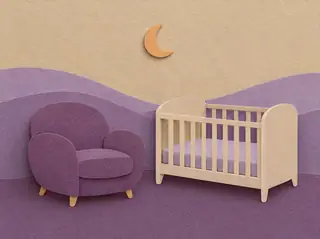
Start bedtime when your baby naturally falls asleep, then move it earlier in 15-minute steps.
Protest Least
You stay in the room, then move your chair a little farther every couple of nights: beside the crib, mid-room, the doorway, then just outside the door.
Protest Some
You leave the room and come back for short, calm check-ins on a timer that lengthens each night. Some crying while you’re out, with regular brief visits. The fastest route.
Protest Most
28 short lessons you can do with a baby on your shoulder, plus the tools you use at bedtime and at 2 a.m.
Your plan: all 7 nights
Bedtime Mode: steps and timers
The night logger: one tap each
The 2 a.m. helper: one clear next step
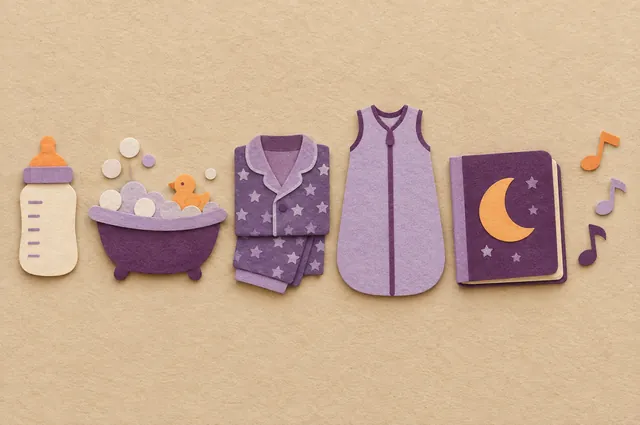 From “A 20-minute routine”
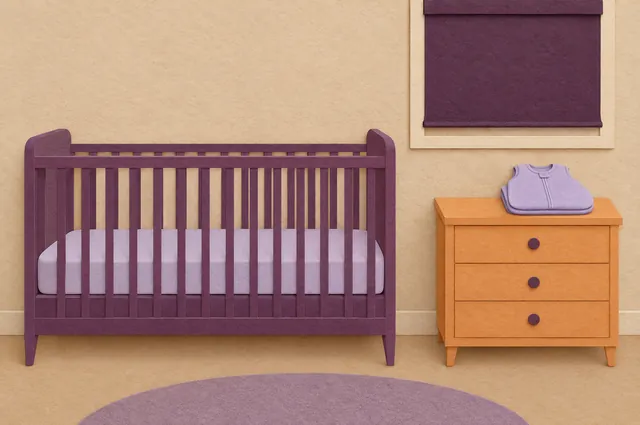 From “The safe-sleep setup”
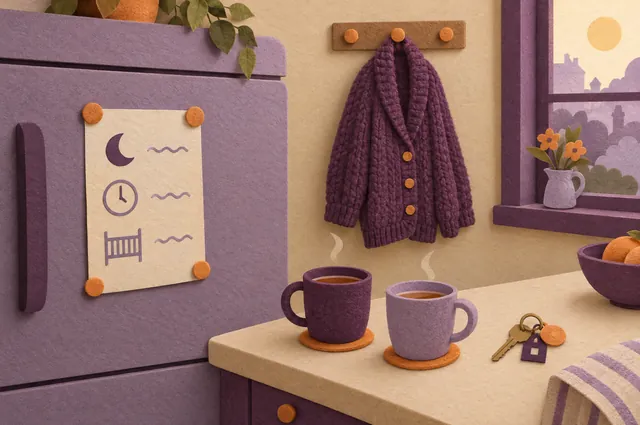 From “Two caregivers, one plan”
How the plan works and a safe crib
How the 7 nights work · The safe-sleep setup
Why babies wake, and what helps
Why babies wake · Sleep pressure & wake windows · Sleep associations
Room, routine and the feed
The sleep room · A 20-minute routine · Moving the feed earlier
Pick one of three
Three approaches, honestly compared · Gradual bedtime shifting · Stay-in-the-room fading · Timed check-ins
One briefing each evening
Add the ones that fit your family
Deciding with your pediatrician · Reducing feeds gradually
Add the ones that fit your family
Early morning waking · Standing in the crib · Pacifier replugging · Illness & teething: pause and restart · Setbacks after progress
Add the ones that fit your family
Room-sharing · From bed-sharing to the crib · Two caregivers, one plan
Crib naps, short naps, schedules
Crib naps from contact naps · Fixing short naps · Nap schedules by age · Dropping a nap · Naps on the go
Naps, travel and daycare after Night 7
A 2016 randomized trial of 43 babies aged 6–16 months tested methods similar to timed check-ins and gradual bedtime shifting. Both helped babies fall asleep faster, with no difference in attachment a year later. Gradisar et al., Pediatrics, 2016
A 5-year follow-up of an infant sleep trial found no differences in children’s emotional or behavioral health, or in parent–child relationships. Price et al., Pediatrics, 2012

$129
One time · lifetime access30-day money-back guarantee. Ask within 30 days for a full refund. No questions.
It’s built for healthy babies 4–12 months old (adjusted age if born early) who are gaining weight well. Talk to your pediatrician first if your baby is under 4 months, isn’t gaining weight well, snores loudly or pauses in breathing, is sick right now, is being followed by a doctor for a condition, or your doctor has said to keep night feeds. We ask about these before you pay, and again before the plan starts. If it isn’t right for your baby, ask within 30 days for a full refund.
Probably some. Learning a new way to fall asleep usually brings some protest, and you choose how much. Gradual bedtime shifting has the least: bedtime starts when your baby naturally falls asleep, then moves earlier. With stay-in-the-room fading, you stay in the room while your baby learns. Timed check-ins have the most: there’s some crying while you’re out of the room, with regular brief visits on a timer. Whichever you choose, you pause the plan if your baby is unwell.
Yes. The plan never drops night feeds on its own: that’s your pediatrician’s call. The “Reducing feeds gradually” lesson shows how to cut back slowly, with your pediatrician’s okay. A feed that’s part of falling asleep can move to the start of the bedtime routine, and the goal is still a full feed.
Pause. Tell the morning recap your baby is sick and the plan waits while you comfort them and call your pediatrician if needed. When they’re well, you repeat the last night you finished, then carry on. A lesson covers how to restart.
It covers them, after the nights. Night 7 starts carrying the same routine over to naps, and five nap lessons are included: crib naps, short naps, nap schedules by age, dropping a nap and naps on the go. The “Lock it in” lesson then covers naps, travel and daycare after Night 7.
Yes. A crib in your room is the safe-sleep default, and the “Room-sharing” lesson covers doing the plan when you share a room. If your baby sleeps in your bed now, the plan adds a step to move them to their own crib first.
The plan is built from one baby’s answers. If your twins are on a similar schedule, you can follow it for both, with each twin in their own crib. The “Two caregivers, one plan” lesson covers splitting nights between two adults.
The middle nights can feel harder before they feel easier. Your 30-second morning recaps show the trend, and on Night 4 the plan has you look back at your log and shows troubleshooting cards if nothing has changed yet. You can switch approach; it restarts at Night 1. If it isn’t working for you, the 30-day money-back guarantee still applies.
For life. It’s one payment of $129 with no subscription. Everything works on your phone, and you sign in with an email link, so there’s no password to remember at 2 a.m.
Buy once, answer a few questions about your baby, get your plan, and follow tonight’s steps on your phone.
30-day money-back guarantee. Ask within 30 days for a full refund. No questions.